Predictive Marketing in Action: How to Turn Customer Data Into Better Marketing Decisions
AI has given marketers access to more tools, more data, and more ways to automate than ever before. But having more technology doesn't automatically make the marketing better.
Over the last four years, I've spent a lot of time testing predictive AI in real marketing environments. And what I've learned is that the value isn't in having the most sophisticated model or being able to say you're using AI.
The value comes from what you can actually do differently because of it.
Where predictive AI started becoming valuable for me was when we could connect it to actual marketing decisions. We could use the data to better understand which prospects deserved our attention, what motivated different customer segments, and where opportunities existed across acquisition, retention, and even sales.
That’s when the technology started feeling less like an AI experiment and more like something that could improve the way we worked around our paid media strategy and campaign efforts
Because when predictive analytics starts answering real business questions, it stops being an abstract model and starts becoming a marketing system.
What Predictive Marketing Actually Means
At its simplest, predictive analytics uses patterns in past customer behavior and data to estimate what is most likely to happen next.
Most marketers are already comfortable looking backward. We look at campaign reports to understand what happened, then dig into the data to figure out why it happened.
Predictive analytics adds another layer by helping us understand what is likely to happen next and, more importantly, whether we can use that information to make a better decision now.
That might mean recognizing that a prospect shares characteristics with your highest value customers, identifying when an existing customer is showing signs of churn, or understanding that a particular audience is more likely to respond to one message or offer over another.
But there's an important distinction here. Predictive marketing isn't just the model producing a score.
The way I think about it is that existing customer data becomes the baseline for predictions, predictions become actions, and those actions create performance feedback. The model is one part of that process. The marketing value happens when the prediction actually changes what your team does.
Why Predictive Marketing Matters Right Now
Marketers are dealing with a familiar set of problems. Media costs are less predictable, audiences are fragmented, targeting isn't as reliable as it used to be, and most teams don't exactly have unlimited time or resources.
At the same time, expectations are moving in the opposite direction. Leadership expects more efficiency while consumers increasingly expect relevant and personalized experiences from the brands they interact with.
We're being asked to reach the right people, personalize the message, improve performance, and prove the business impact of our marketing.
Predictive analytics gives us another way to close that gap.
Instead of treating every prospect or customer the same, we can start looking for the signals that help us understand who someone is, what they may care about, and what they're likely to do next.
That's a very different starting point for a marketing strategy.
Better Prediction Starts With Better Customer Data
One of the first things I learned when we started working with predictive models was also one of the least exciting: your data matters.
Most companies already have valuable first party information. They may have names, email addresses, transaction history, product information, geography, CRM activity, renewals, or engagement data.
That's a great starting point, but we found that there were often important gaps in the customer picture.
For our work, one solution was using the Faraday identity graph to enrich existing customer records with additional household, demographic, financial, shopping, property, lifestyle, and interest data. That gave the models more context to identify the traits and behaviors that actually distinguished different customers.
The lesson isn't that every marketer needs thousands of additional data points before they can get started. It's that predictive marketing is only as useful as the signals you're giving it and many organizations don’t have the ability to collect those signal points, which is why marrying first party data and third party context data is so important to building a strong predictive model.
My advice is to start with what you already know about your customers, and then look at where the gaps in that data are preventing you from understanding their behavior. The goal isn't collecting more data for the sake of having it. It's building a clearer picture that helps you make better decisions.
Use Predictive Data to Understand Who Your Customers Really Are
One of the first practical applications we explored in using predictive modeling in our campaigns was persona development.
Traditional personas can be valuable, but they're often built through research, workshops, surveys, or assumptions about what a particular customer looks like. These exercises are valuable but cost time & money we often don’t have as marketers before we activate. Predictive analytics gives us another approach.
Using cluster modeling, we can group people based on shared traits and behaviors and look for meaningful patterns within the customer base.
Instead of deciding ahead of time that our customer is a 45 year old homeowner with a certain income, we're allowing the data to show us which characteristics actually differentiate groups of customers. And we're not just looking for demographics. We're looking for motivation & traits we would otherwise easily miss without contextual data we may not have access to in our first party data.
For example, the data may show that one group is more motivated by premium experiences and status while another cares more about freedom and adventure. A different segment may place greater value on family, comfort, and creating experiences together.
Those differences become much more useful when they start changing the marketing.
Your Personas Should Change Your Creative
This is where I see a lot of teams leave value on the table.
They put a tremendous amount of work into identifying and segmenting an audience, and then everyone gets essentially the same ad.
If your data tells you that two audiences have different motivations, it doesn't make much sense to expect the same message to work equally well for both.
For an audience motivated by freedom and adventure, the creative might emphasize exploration, capability, range, and time outside. A family focused audience may respond more strongly to comfort, togetherness, ease, and memorable experiences.
The model isn't supposed to write the ad for you. It should give your creative team a better understanding of what the ad needs to accomplish by speaking directly to that audience.
That's where predictive analytics becomes more than a targeting advantage. It becomes a creative advantage because audience intelligence starts informing the value proposition, imagery, offer, CTA, and message itself.
And the same thinking doesn't have to stop with paid media. Once you understand the persona behind a customer or prospect, that intelligence can influence email nurture, website messaging, proof points, offers, and the overall experience you create for that audience.
Personalization becomes much easier to scale when you actually have a reason for changing the experience.
Move From Understanding Customers to Predicting Outcomes
Persona modeling helped us better understand who our customers were, but as we started using predictive AI more seriously, we ran into another challenge.
We didn't want to use AI simply because the technology was interesting. We needed to connect it to an actual business outcome.
That shifted our thinking toward propensity, or outcome, modeling.
Instead of only grouping customers based on similarities/traits, we could start with an outcome that had already happened, such as a purchase, cross-sell, renewal, or churn event. From there, we could work backward to understand which traits and behaviors were most associated with that outcome.
The model can then score other household prospects or customers in your market area based on how closely they resemble those patterns.
Now the prediction has a direct connection to growth. A marketer can better understand which prospects are showing stronger signs of becoming customers, where there may be an opportunity to increase customer value, or when someone is beginning to resemble customers who eventually churned.
That gives the team an opportunity to act before the outcome happens.
Someone showing high purchase intent may need a more direct path to conversion, while an existing customer who resembles past churners may need earlier and more personalized communication.
In other words, prediction should change the timing, message, and offer, not simply add another field to your CRM.
What This Changes About Paid Media
Paid media efficiency was one of the biggest reasons we started exploring predictive AI at Mission Disrupt.
We were already testing creative, optimizing paid social media campaigns, and using the targeting capabilities available inside the platforms. But eventually we started thinking about the problem one level higher: how do we get better at deciding who deserves the budget in the first place?
Predictive scoring gave us a way to approach that differently.
Rather than spreading budget equally across broad audiences, prospects or households can be ranked by their likelihood to take a particular action. Those audiences can then be activated across channels like Meta, Google, YouTube, email, CRM programs, and other media.
But simply uploading a predictive audience isn't enough.
The audience needs to be connected to the outcome you're predicting, and the creative needs to connect to why that audience is likely to act. That's where you start bringing persona intelligence and outcome prediction together.
If we're better at identifying the right people but continue showing them generic messaging, we've only solved half the problem.
The score isn't the point. Better activation is the point. Beyond more precise targeting based on propensity, predictive audiences allowed us to enforce a more consistent multi-touch strategy across paid media channels. Instead of relying on each platform’s individual definition of the target audience, we could reach the same audience across platforms. In other words, predictive audiences create a unified way to define, connect, and share audiences across paid media platforms.
What This Looks Like in the Real World
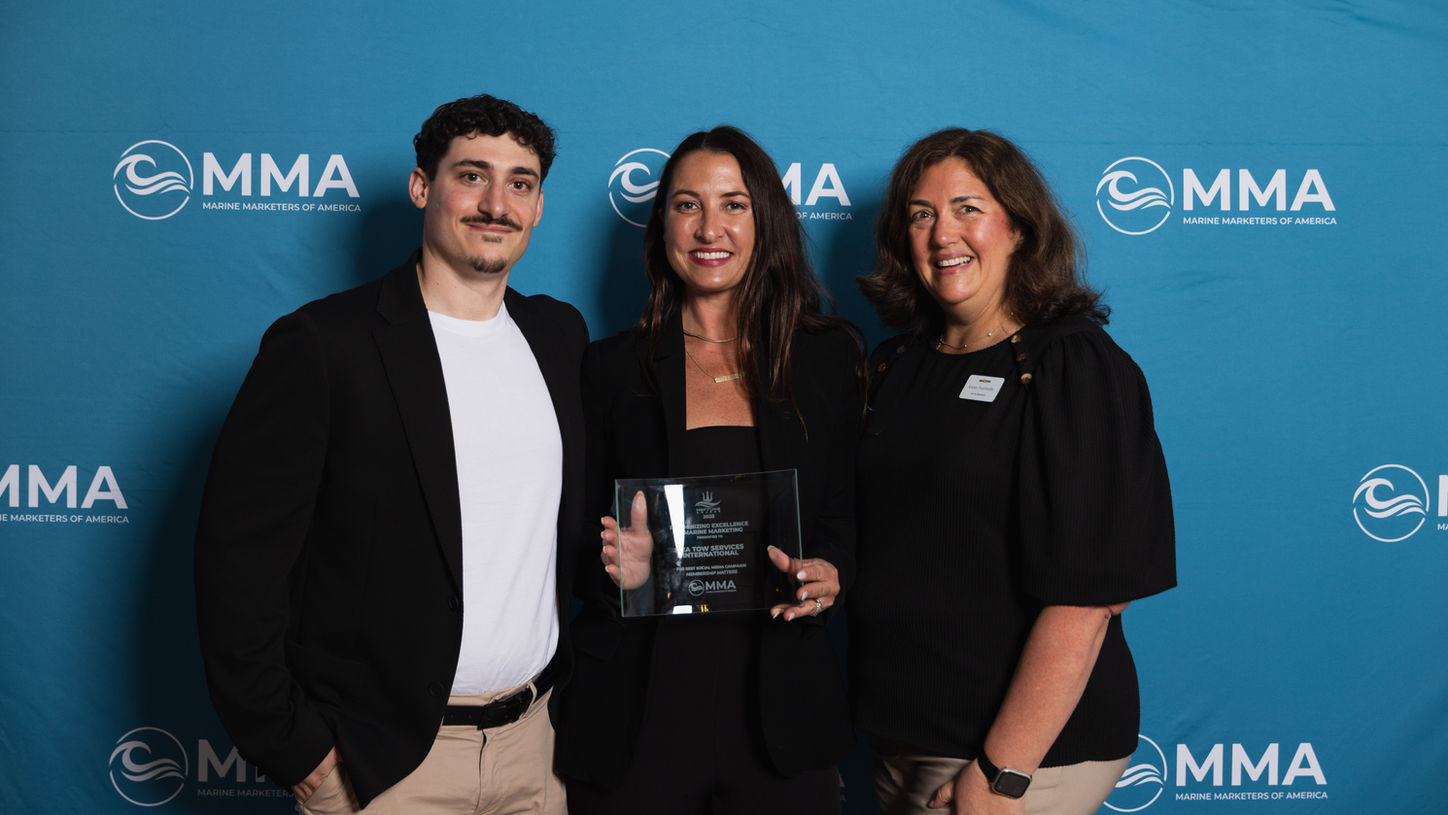
We had the opportunity to put this thinking into practice for client Sea Tow, whose campaign was ultimately recognized with the Best Use of AI award by the Marine Marketers of America.
Mission Disrupt developed a predictive AI system designed to help Sea Tow identify high value prospective members and improve the efficiency of its digital advertising. The broader challenge included scaling member acquisition more efficiently, making messaging more relevant by segment, reducing churn risk, and creating more consistent audience targeting across channels.
The campaign contributed to a 47% decrease in CPA in 2024, influenced more than 6,600 paid social transactions, and was followed by an additional 23% decrease in CPA in 2025.
What I like about this example isn't simply that the numbers improved. It's that predictive AI wasn't being used as a standalone tactic.
It became an intelligence layer that could influence how we thought about the audience, creative, targeting, acquisition, and eventually other parts of the customer journey.
That's where I think the technology becomes much more interesting for marketers.
You Don't Need to Build the Whole Machine on Day One
If your organization isn't ready for a sophisticated predictive platform, that's okay. I wouldn't start there anyway.
Start with the customer data you already have and a business problem worth solving. That could mean getting a better understanding of the different personas within your customer base, improving acquisition efficiency, identifying churn risk, or helping your sales team better prioritize leads.
From there, apply what you learn to an actual marketing workflow where you can measure the impact.
The key is to prove one win before expanding.
One of the biggest mistakes I've seen with AI is starting with the technology and then searching for somewhere to use it. Predictive marketing works much better when you reverse that thinking. Start with the business decision you want to improve and determine whether predictive analytics can give your team better information to make it.
That's ultimately the biggest lesson I've learned working with predictive AI.
The goal isn't to predict everything your customers will do. It's to understand where better prediction can actually improve the way your team works.
Because when the data helps you understand your customers more clearly, build more relevant marketing, spend your budget more intelligently, and make better decisions about what happens next, predictive AI stops being something interesting to talk about and instead it starts becoming something useful.
